Have you ever said that to yourself? Or thought it about someone else?
You watch someone climb all seven summits; you hear about a woman who went back to law school in her fifties or sixties; ou meet the first person in their field to do something nobody thought was possible. And the question comes automatically: how do they do it?
I ask myself that question too. Even after climbing Kilimanjaro, even after building a stage career from scratch, even after writing a bestselling book, I still look at other people and think, I don’t know how they do it. That question never fully goes away. But researching what actually builds high achievers changed something for me. The people who accomplish extraordinary things are not accomplishing them the way we imagine.
Real stories of people who achieved the “impossible”
Richard Bass was the first person to complete the Seven Summits, back in 1985. He wasn’t a professional climber. He was a Texas businessman in his fifties, owner of the Snowbird ski resort in Utah, and in the late 1970s he realized, almost by accident, that he’d already climbed the highest peaks on a few continents without setting out to. So he made it official. He gave himself a goal: the tallest mountain on every continent, one at a time. His first two attempts at Everest failed. He went back a third time and summited at age 55, becoming the oldest person to climb Everest at that point. Learn more about Richard Bass.
Erik Weihenmayer has been blind since he was thirteen. In 2001, he became the first blind person in history to reach the summit of Mount Everest, and by 2002 he’d completed all seven summits, the only blind climber ever to do it. He didn’t wait for his circumstances to change before he started. He found a different way to do the thing. Learn more about Erik Weihenmayer.
Gail Segers didn’t go to law school in her twenties. She ran a sporting goods store, and when the shop started failing, she decided to finally become the lawyer she’d always wanted to be. She passed the bar at 61, and still practices today. Her daughter Betsy later followed her into law school too, and sums up what her mother’s story taught her: “I hear people say they can’t change jobs later in life, but I say don’t do that to yourself.” Read their story on the BBC.
Each of these stories triggers the same reaction in us: awe, followed almost immediately by distance. We tell ourselves they must be built differently. More talented. Braver. Wired for it in a way we’re not.
Here’s what the research says instead.
What the research says separates high achievers from everyone else
Psychologist Angela Duckworth spent years studying why some people achieve extraordinary things and others, with equal or greater talent, don’t. Her research, now among the most cited in modern psychology, defines grit as a combination of passion and perseverance toward a long-term goal, and argues that it’s grit, not talent, that ultimately determines who succeeds. Read more of Angela Duckworth’s research.
That’s worth sitting with, because it directly contradicts how we usually explain other people’s achievements. Grit isn’t talent; Grit isn’t luck; Grit isn’t even how intensely you want something in a single moment. Duckworth describes it instead as an “ultimate concern,” a goal you care about so much that it organizes and gives meaning to almost everything you do. Grit is holding steadfast to that goal even when you fall down, even when you screw up, even when progress toward it is halting or slow.
Separate research on high achievers backs this up from a different angle entirely. Studies on personality and achievement consistently point to two traits above all others: conscientiousness and openness. Not raw intelligence. Not natural gifts. The specific components that matter most are industriousness, meaning diligence and self-discipline, and intellectual curiosity, meaning independent-mindedness and a willingness to keep learning.
Put Duckworth’s grit research and the personality research together, and a pattern emerges that should be reassuring rather than intimidating. The people who do the things we call “out of their realm” aren’t operating from some reserve of confidence or ability the rest of us are missing. They’re operating from a decision. A specific goal they care about enough to keep choosing, day after day, long after the initial excitement wears off. It’s the same idea at the heart of the REAL Method®: confidence isn’t something you wait to feel, it’s something you build one deliberate choice at a time.
Why achievement is never one giant leap
This is the part that gets lost when we watch someone else’s highlight reel. We see the summit photo. We don’t see the thousand small, unglamorous choices that got them there.
Richard Bass didn’t decide to climb the world’s seven tallest mountains and then simply do it. He climbed one. Then he climbed another. Each summit was its own separate commitment, made over years, with failed attempts along the way. His first two tries at Everest didn’t work. He went back a third time.
Erik Weihenmayer didn’t wake up one day able to climb blind. He spent years building the specific skills it takes, first as a wrestler in high school, then as a rock climber learning to read a wall with his hands, long before Everest was ever the goal.
I know this pattern intimately because I’ve lived a version of it. Before Kilimanjaro, I wasn’t an athlete or an outdoorswoman. I was a stay-at-home mom of six. I had never climbed anything in my life. I’d gone camping exactly twice, and both times I went home early. So when I set out to climb Kilimanjaro, I wasn’t thinking about the summit on day one. I was thinking about the next step. Somewhere on that mountain, in the thin air and the exhaustion, I found what I now call Ctrl-Alt-Delete: the ability to reset your mindset mid-climb instead of quitting. That skill didn’t come from being braver than anyone else on that mountain. It came from refusing to let one hard hour convince me the whole thing was impossible.
That’s what grit actually looks like in practice. Not a personality trait you’re born with. A decision you keep making, one step at a time, especially on the days it would be easier to stop.
Why “how do they do it” is the wrong question
The question itself assumes a gap between us and them, some missing ingredient we don’t have access to. But when you look closely at Richard Bass climbing Everest on his third try, or Erik Weihenmayer building climbing skill for years before Everest was ever the plan, or Gail Segers rebuilding her career at 61, or my own slow climb up a mountain in Tanzania, the missing ingredient isn’t missing. It’s just unglamorous; it’s showing up on the day you don’t feel like it; it’s caring about a goal enough to keep choosing it after the novelty fades.
The better question isn’t how do they do it. It’s what am I willing to keep choosing, even when it’s hard, even when it’s slow, even when nobody’s watching?
That question you keep asking yourself when you look at someone else’s achievement? Flip it. Ask what you’re willing to build one deliberate step at a time. That’s the whole answer. That’s how they did it. And it’s how you will too.
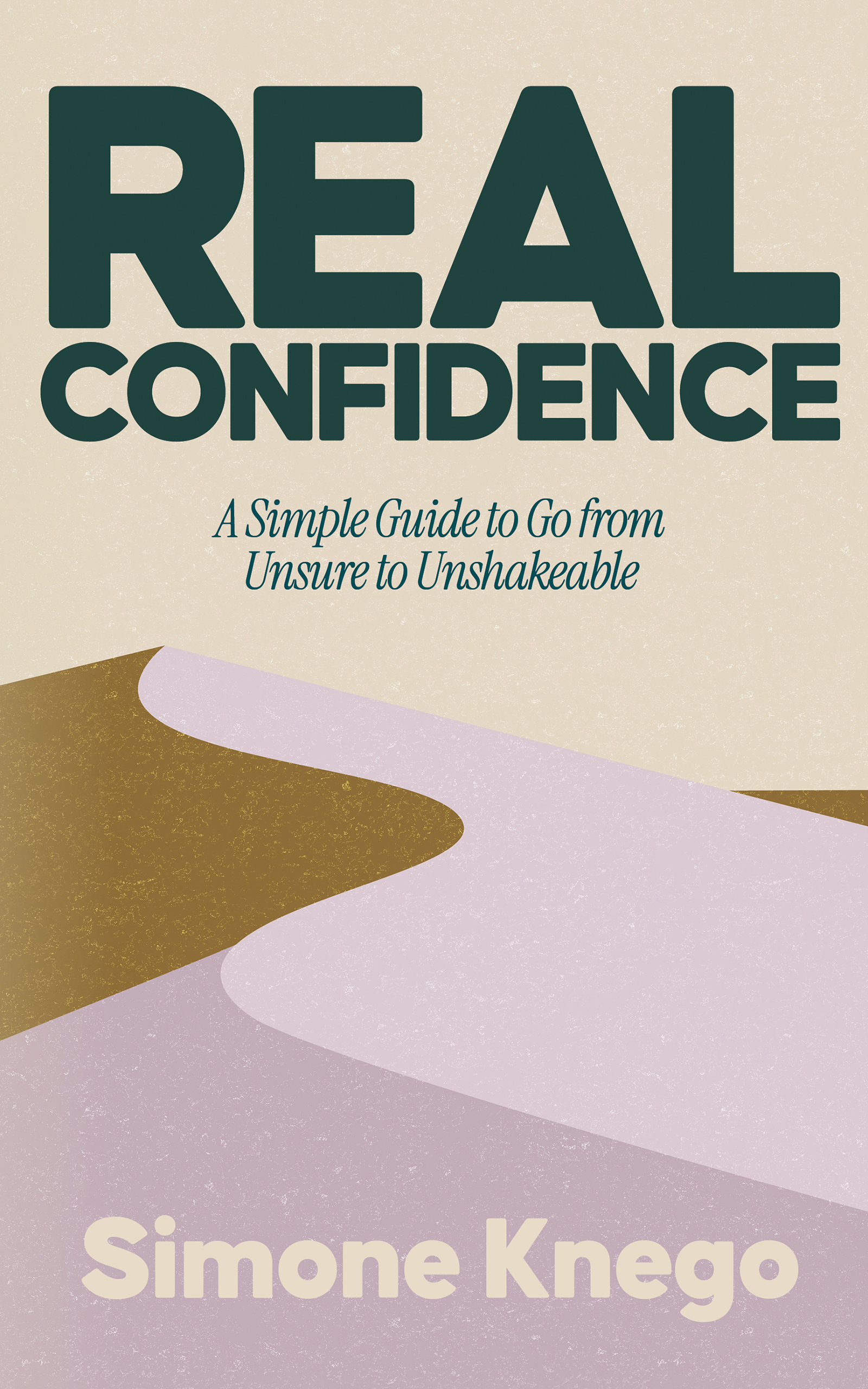
If this resonated, my daughter, Olivia, and I dig deeper into what earned confidence actually looks like in this episode of Her Unshakeable Confidence, where Emily Kendel shares how confidence isn’t something you’re born with, it’s something you build through your hardest seasons. And if you want the full framework behind building confidence one deliberate choice at a time, it’s in REAL Confidence.