More than ten years ago I stood at the base of Mount Kilimanjaro. This experience showed me the connection between Potential and Performance in unexpected ways. I was a stay-at-home mom of six. I’d never hiked anything harder than a neighborhood trail. Nobody who knew me would have picked me to summit a 19,000 foot mountain. Including me.
I trained for months to get up that mountain, and the training mattered. But plenty of people train and still talk themselves out of the summit push when it gets hard. What got me to the top wasn’t just the conditioning. It was that somewhere on that climb I stopped caring what people thought I was capable of and started trusting what I actually was.
That gap, between what a person can do and what they let themselves do, is the same gap I see in almost every organization I walk into. And the data backs me up.
The Numbers Behind the Gap
Global employee engagement fell to 20% in 2025, the lowest it’s been since 2020. Gallup says that costs the world economy about $10 trillion in lost productivity. Read that again. Four out of five employees are clocking in every day and never bringing their full self to the work.
Nearly one in four employees is now sitting on what researchers call unused capacity. Burnout’s easing up in a lot of places, but something quieter is taking its spot: people who are present, capable, and completely checked out from their own potential. The average worker is only productive for about six hours of an eight hour day.
I don’t call that a productivity problem. I call it a confidence problem wearing a productivity costume.
What’s Actually Holding People Back
Ask people why they hold back a good idea, stay quiet in a meeting, or turn down a stretch assignment, and it almost always traces back to self-doubt. 43% of U.S. workers say they feel like impostors at work, like their success is undeserved and they’re one slip away from being found out. Two-thirds say they feel pressure to look more confident than they actually feel. There’s a name for that now: confidence theater. And here’s what keeps it running. Nearly two-thirds of workers say their leaders rarely or never talk openly about their own doubts or mistakes. When nobody at the top admits they’re figuring it out too, everyone below them learns that uncertainty is something to hide, not something to say out loud.
58% of workers say self-doubt has straight up hurt their career growth. Globally, an estimated 62% of employees deal with impostor syndrome. And it hits emerging leaders hardest. Leaders between 24 and 44 report frequent impostor thoughts nearly twice as often as leaders between 55 and 74. So the people you’re counting on to run things in ten years are often the ones most convinced they don’t belong in the room right now.
Managers aren’t off the hook either. Manager engagement dropped from 30% to 27% in a single year, and that uncertainty trickles down to everyone who reports to them. A team almost never outperforms the confidence of the person leading it.
I say this to every HR and L&D leader I talk to. You can train skills all day long, and you should. But skill without belief doesn’t turn into output. Someone convinced they’re one mistake from being exposed will underperform every single time. Not because they can’t do the work. Because they’re too busy managing the fear to actually do it.
Belonging Changes the Math
A quarter of employees say they don’t feel like they truly belong in their organization, and that shows up directly as performance dips and one foot out the door. I’ve seen this up close. People who don’t feel secure in where they stand rarely take the risks great performance requires, they won’t raise the idea nobody else wants to say out loud, they’ll let a mistake sit instead of owning it early, and they’ll wait until something’s an emergency before they ask for help with it.
On that mountain, the guides who pushed me hardest weren’t the ones telling me I could do it. They were the ones who made me feel like I already belonged on that trail. That’s what belonging does. It gives people permission to stop performing and start actually producing.
Closing the Gap Is a Skill, Not a Personality Trait
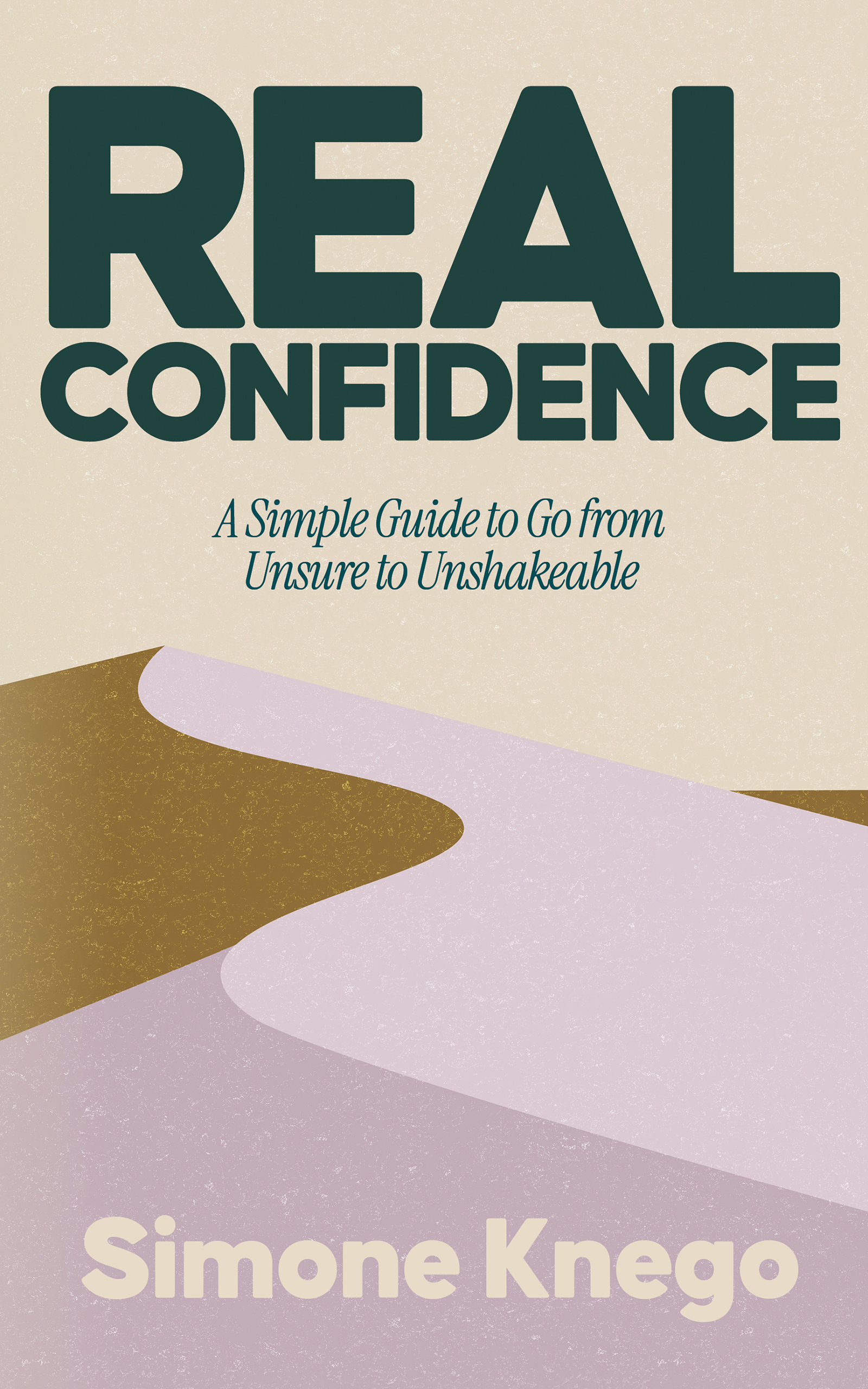
I talk about this on stage more than almost anything else. Confidence isn’t something you’re handed or born without. It’s trainable, and I built my REAL Method® around that, four habits that anyone can actually learn.
Respect Yourself. People who’ve internalized self-respect stop waiting around for someone else’s stamp of approval. They bring ideas forward faster and bounce back quicker.
Embrace Your Failures. When a mistake becomes information instead of proof you don’t belong, you start taking the calculated risks that actually move things forward. This is the direct antidote to confidence theater, since the whole reason people perform certainty is that they’ve learned admitting doubt gets punished. A leader who talks openly about a mistake gives everyone else permission to stop pretending.
Ask Yourself What You Want. This is the one that breaks the confidence theater cycle. Once you can name what you actually want, you stop spending energy on appearances and start spending it on output.
Live Without Limits. This is where potential finally turns into performance. It’s testing the ceiling you assumed was there instead of just accepting it. It’s what got me up that mountain.
None of this is luck or a personality some people got and others didn’t. These are behaviors. And behaviors get built the way anything gets built: repetition, honest feedback, and a culture where it’s safe to practice them out loud.
What This Means for the People Building Your Teams
If your organization is pouring money into leadership development, succession planning, or high potential programs, the confidence gap deserves just as much attention as the skills gap. A brilliant leader who doesn’t trust their own judgment will hesitate at the exact moment it matters most. A high potential employee wrestling with impostor feelings instead of doing their best work is a flight risk long before anyone notices a dip in their numbers.
The organizations closing this gap aren’t the ones with the most talent on paper. They’re the ones who stopped assuming talent and performance were the same thing and started actually building the confidence that turns one into the other.
I didn’t come up with Turn Potential Into Performance because it sounded good on a slide. It came from that mountain, and honestly it comes from every organization I walk into where someone’s sitting on more than they’re using, just waiting for permission to trust what they already know.
Key Takeaways
- Global employee engagement dropped to 20% in 2025, its lowest point since 2020, costing the world economy an estimated $10 trillion in lost productivity.
- 43% of U.S. workers experience impostor feelings at work, and 58% say self-doubt has directly hurt their career growth.
- “Confidence theater” describes the growing gap between how confident employees feel internally and how confident they believe they must appear at work.
- The gap between potential and performance is rarely a skills problem. It’s most often a confidence problem, and confidence is trainable.
- Simone Knego’s REAL Method® (Respect Yourself, Embrace Your Failures, Ask Yourself What You Want, Live Without Limits) is a four-habit framework for closing that gap.
Sources: Gallup State of the Global Workplace 2026; ActivTrak 2026 State of the Workplace; MyPerfectResume, Confidence at Work; Asana, Turning Impostor Syndrome into Confidence; AIHR, Employee Experience Statistics; Gable.to, Employee Productivity Statistics