If you’ve searched “how to feel more confident at work” or “how to stop feeling like a fraud” lately, you’re not alone. In fact, recent imposter syndrome statistics 2026 show just how widespread these feelings are. You’re part of a very large, very current wave.
Right now, confidence is having a rough year. Not just personal confidence. All of it. CEO confidence dropped in the first quarter of 2026 as tariff and geopolitical uncertainty stalled decisions. Consumer confidence took a hit too, with the University of Michigan’s Consumer Sentiment Index falling to its lowest reading since December. And inside organizations, only 58% of executives say they’re confident in how their company manages change, according to Perceptyx research.
When the people at the top feel shaky, that feeling doesn’t stay at the top. It trickles into every meeting, every performance review, every “do I actually belong here” moment your team is quietly having at their desks.
Why does workplace confidence feel lower right now?
Confidence at work is dropping for three overlapping reasons: economic uncertainty, organizational change fatigue, and a newer factor, AI reshaping what counts as valuable work. Each one on its own would be enough to shake people’s confidence. Together, they’re doing real damage to how capable people feel at their jobs.
The new twist: AI is changing what imposter syndrome looks like
Imposter syndrome used to show up at predictable career milestones. A first job. A promotion. A big career pivot. The advice was always the same: fake it until your confidence catches up with your experience.
That advice is running into a problem. A growing number of experienced professionals are describing something workplace researchers are now calling AI driven imposter syndrome. These people didn’t suddenly get less capable. The rules for what counts as valuable work are shifting faster than anyone can comfortably keep up with, and their confidence is taking the hit for it. That’s a genuinely different problem than “I’m new here and I don’t know what I’m doing yet,” and it needs a different kind of answer.
What percentage of people experience imposter syndrome?
Roughly 70% of people experience imposter syndrome at some point in their careers, according to research that’s been replicated across multiple populations since it was first identified by psychologists Pauline Rose Clance and Suzanne Imes. Among female executives specifically, KPMG found the number climbs to 75%.
Nearly half, 45%, of workers say they’ve avoided a promotion, a new role, or a stretch opportunity specifically because of imposter syndrome. That’s a talent pipeline problem dressed up as a soft skills problem. Every leader who quietly opts out of the next opportunity because they don’t feel ready is a leader your organization doesn’t get to develop.
And one more data point that I think matters more than people realize: research suggests that faking confidence, even when it feels hollow at first, can lead to a real and lasting increase in self belief over time. Confidence isn’t only built by feeling ready before you act. Sometimes it’s built by acting, and letting the feeling catch up.
Why affirmations alone won’t fix workplace confidence
A lot of workplace advice on confidence stops at “just believe in yourself” or “list your wins.” Those things help, but they’re not the whole answer, and treating them like the whole answer is part of why so many capable people still feel stuck.
Confidence that actually holds up under pressure is a practice, built the same way strength is built, through repetition, through evidence, and through a willingness to fail publicly and survive it.
This is where I always come back to what I call the REAL Method®. Real, lasting confidence comes down to four things:
Respect yourself. Not in a bumper sticker way. In the specific, daily way of not talking to yourself like you’d never talk to someone you respect.
Embrace your failures. Not as evidence you don’t belong, but as the actual raw material confidence is made from. You can’t build evidence of resilience without something to be resilient about. I’ve written more about redefining failure as a growth tool here.
Ask yourself what you want. So much workplace anxiety comes from chasing goals that were never actually yours. Confidence gets a lot easier to access when you’re aiming at something you actually chose.
Live without limits. Meaning the limits you’ve quietly accepted as permanent are usually more negotiable than they feel at 11pm on a Sunday.
What this means for the people leading teams right now
If you’re in HR, L&D, or leading a team through this stretch, here’s the practical takeaway. Your people aren’t imagining the uncertainty. It’s real, it’s economic, it’s organizational, and now it’s technological too. Telling them to “just be confident” without acknowledging that context will land flat.
What actually helps is building environments where people can take a visible risk, be wrong, and stay in the room. Psychological safety isn’t a nice to have this year. It’s the thing standing between a team that freezes under pressure and one that adapts.
Confidence, at the individual and the organizational level, isn’t about having zero doubt. It’s about knowing what to do with the doubt when it shows up. That’s a skill. It can be taught, practiced, and rebuilt, even in a year that’s given everyone plenty of reasons to lose it.
Frequently asked questions
What is causing low confidence at work right now? A mix of economic uncertainty, organizational change fatigue, and AI reshaping how work is evaluated. Leaders at every level, including CEOs, report lower confidence heading into 2026 than in prior years.
Is imposter syndrome the same as anxiety? Not exactly. Imposter syndrome is a psychological pattern, not a diagnosable condition, but it’s strongly associated with anxiety, burnout, and low self esteem, and the two often show up together.
Can confidence actually be rebuilt, or is it fixed? It can be rebuilt. Confidence works more like a skill or a muscle than a fixed trait. Practices like the REAL Method®, evidence based reflection, and psychological safety at the team level all measurably help.
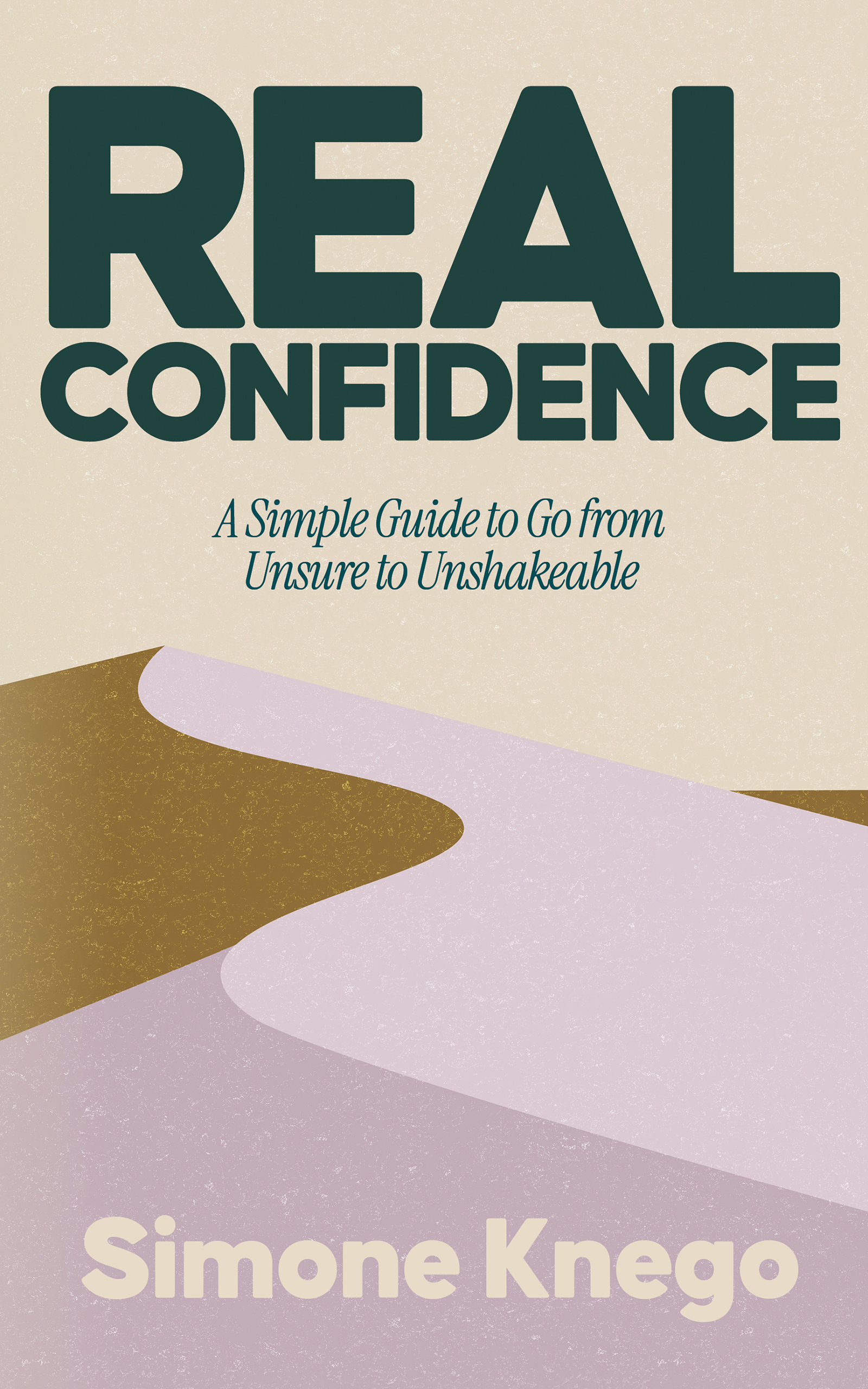
Simone Knego is an international keynote speaker, USA Today bestselling author of REAL Confidence: A Simple Guide to Go from Unsure to Unshakeable, two time TEDx speaker, and host of the Her Unshakeable Confidence podcast. She helps HR leaders and organizations build the kind of workplace confidence that holds up under real pressure, not just the kind that looks good on a slide.