There’s a conversation happening in boardrooms and HR departments right now, and it’s not just about strategy or technology or the economy. It’s about people. More specifically, it’s about whether the people inside your organization actually believe in themselves enough to do their best work. Confidence in the Workplace is at the heart of this important discussion.
Confidence in the workplace isn’t a soft skill. It’s not a nice-to-have leadership quality or a feel-good topic for the company retreat. It’s a measurable, trackable driver of performance, retention, and profitability. And the data backs that up.
If you’re leading a team, running a company, or sitting in an HR seat trying to figure out why engagement numbers keep sliding, this is the conversation you need to be having.
The Confidence Crisis at Work Is Real
Let’s start with what’s actually happening out there. Gallup’s State of the Global Workplace report found that only 21% of employees worldwide are actively engaged at work. That means roughly 79% of your workforce is going through the motions. They’re showing up, technically, but they’re not fully in the game.
And here’s what’s underneath that disengagement: a quiet, often unnamed confidence crisis. Employees who don’t feel capable, valued, or trusted don’t raise their hand in meetings. They don’t take initiative on projects. They don’t offer the creative ideas that move companies forward, they play it safe, do the minimum, and eventually leave.
That quiet epidemic of self-doubt has a price tag. A significant one.
What Low Workplace Confidence Actually Costs
The financial impact of disengagement and low confidence isn’t abstract. It shows up in real numbers across your organization.
Turnover is one of the biggest costs. Research shows that companies with strong recognition programs (a direct confidence booster) see 31% lower voluntary turnover. When you flip that around, organizations that don’t invest in making employees feel capable and valued are paying the price in exits, recruiting costs, and lost institutional knowledge.
Consider that replacing a single employee can cost anywhere from 50% to 200% of their annual salary, depending on their role. Multiply that across a team where people feel overlooked, underestimated, or chronically unsure of their standing, and you’re looking at a massive, unnecessary drain on your resources.
Productivity takes the hit too. One study found that showing confidence in your workforce makes employees twice as focused and more than four times more satisfied with their jobs. That’s not a marginal improvement. That’s a transformation in output, and it comes from something as foundational as a leader believing in their team.
Confidence Is a Leadership Issue First
Here’s what most companies miss: you can’t build a confident workforce without confident leaders. And right now, leadership confidence is struggling.
According to the 2025 Quantum Workplace Trends Report, 74% of HR leaders say managers aren’t equipped to lead through change. Mid-level leaders, the people responsible for translating vision into daily execution, report some of the lowest confidence in company direction. That trickles down fast.
When a manager walks into a team meeting unsure of the plan, unsure of their own authority, or unsure of how to handle a tough conversation, that energy is contagious. Teams pick up on it immediately. And when the leader doesn’t project confidence, the team doesn’t feel it either.
This is why confidence development isn’t just a personal growth topic. It’s an organizational performance strategy.
The Ripple Effect of Confident Teams
When you do get confidence right, the ripple effect is real and measurable.
Confident employees speak up. They flag problems early, which means issues get solved before they become expensive, they offer ideas, which fuels innovation. They take on challenges instead of deflecting them, which drives growth.
Research from Harvard Business Review found that companies excelling at goal alignment (which requires the kind of clarity and conviction that comes from confident leadership) achieve up to a 60% improvement in team performance. That’s not a rounding error. That’s a fundamental shift in what a team can accomplish.
Confident employees also stay longer. Career advancement and professional development consistently rank among the top reasons employees choose to remain with a company. When people feel like they’re growing, like their potential is being recognized and cultivated, their confidence grows too. And confident employees don’t need to leave to prove their worth.
What Undermines Workplace Confidence (And How to Fix It)
You can’t address something you haven’t named. So let’s name the most common confidence killers in workplace culture.
Vague or inconsistent feedback. When employees don’t know where they stand, they assume the worst. Only 14% of employees say performance reviews actually motivate them to improve, according to Gallup. That’s a system that’s doing more harm than good. Replace annual reviews with consistent, real conversation. Make feedback a regular part of your culture, not a once-a-year formality.
A culture of “just.” This one’s personal to me. When employees constantly minimize their contributions (“I just had a small idea,” “I just wanted to mention”), it’s a signal that they don’t feel entitled to take up space. Leaders who model confident communication and encourage their teams to drop the self-minimizing language create a measurable shift in team culture. Words matter. The language your people use about their own contributions shapes how they see themselves.
Missing recognition. The numbers are clear. When employees don’t feel seen, their confidence erodes. Research shows that 90% of employees are more likely to go above and beyond when their work gets noticed. Recognition isn’t just about appreciation. It’s about reinforcing that what someone brings to the table actually matters.
Unclear direction from the top. When leadership communicates with hesitation or inconsistency, teams stall. Clarity from leaders builds confidence in teams. It’s that simple.
The REAL Connection Between Confidence and Culture
Culture and confidence are inseparable. You can’t build a high-performance culture without psychological safety. You can’t create psychological safety without confidence. And you can’t build confidence in individuals who are working inside a culture that quietly punishes risk-taking, visibility, or honest communication.
This is why confidence work at the individual level has to run parallel with intentional culture-building at the organizational level. One without the other only goes so far.
Leaders who are willing to model confidence (including the kind that says “I don’t know, but here’s how we’ll figure it out”) create permission structures for their teams to do the same. That’s where innovation actually lives. That’s where you get the 60%, the 31%, the two-times-more-focused teams the research keeps pointing to.
What You Can Do Starting Now
You don’t need a six-month culture overhaul to start shifting confidence in your organization. Here’s where to start:
Audit your language. Listen to how your team talks about their own work. Do they minimize? Do they hedge? That’s data.
Check your feedback loops. Are you giving consistent, specific, honest feedback? Or are you waiting for performance review season and hoping for the best?
Invest in your leaders. If your managers don’t feel confident, your teams won’t either. Leadership development isn’t optional anymore. It’s a retention and performance strategy.
Make recognition real. Not performative, not annual, not an afterthought. Build recognition into the rhythm of your team.
Name the problem. Self-doubt in the workplace often goes unnamed, which means it goes unaddressed. When leaders are willing to say, “I think we have a confidence gap here,” they open the door to actually solving it.
The Bottom Line on Confidence
Confidence in the workplace isn’t a personality trait that some employees are born with and others are not. It’s a skill. It’s a culture. And it’s a direct business driver.
The companies investing in it right now are seeing it show up in their retention numbers, their innovation pipelines, and their bottom lines. The ones ignoring it are wondering why their best people keep leaving, why engagement numbers keep stagnating, and why all the strategy in the world doesn’t seem to be moving the needle.
Confidence is the needle mover. And it starts with a decision to treat it like the serious business strategy it is.
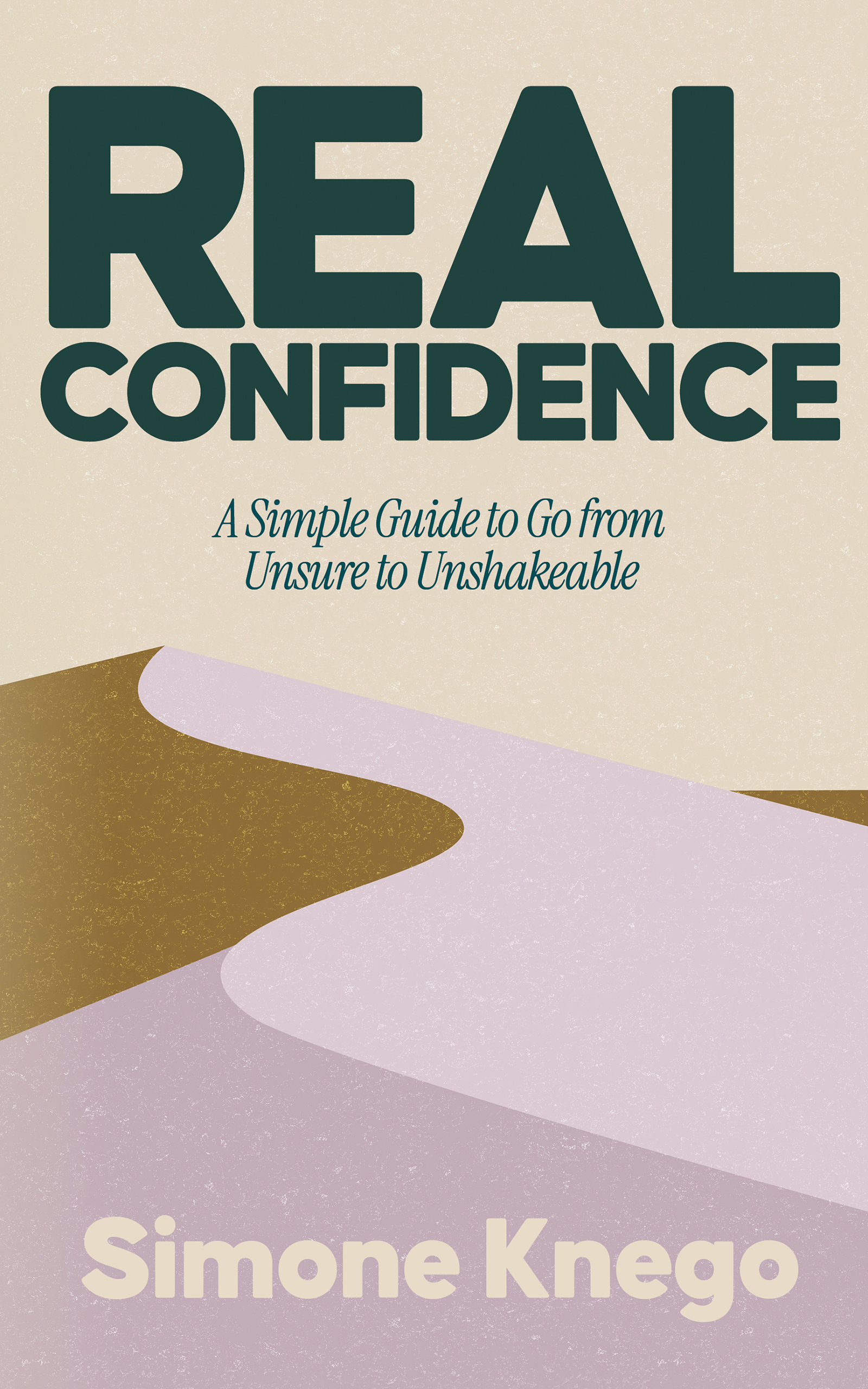
Simone Knego is a USA Today bestselling author of REAL Confidence, a two-time TEDx speaker, and an international keynote speaker helping leaders and organizations build the kind of confidence that actually moves people. Learn more at simoneknego.com or listen to Her Unshakeable Confidence wherever you get your podcasts.